%20(1).png?width=349&height=75&name=DSman%20logo%20blue%20dark%201200%20(1)%20(1).png)

If you run a fishing guide service or charter business, your company name is one of your most valuable assets. It is the name customers search online, recommend to friends, and remember when booking their next trip.
But many guides don’t realize that unless your name is legally protected, another business could start using the same name or something very similar.
Registering a trademark protects your business name and helps ensure that the reputation you build stays connected to your company.
This guide explains why fishing guides and charter captains should trademark their business name, how the process works, and what it typically costs.
Why Fishing Guides Should Trademark Their Business Name
Fishing guides invest years building a reputation through customer reviews, social media, and word-of-mouth referrals.
Your business name appears on: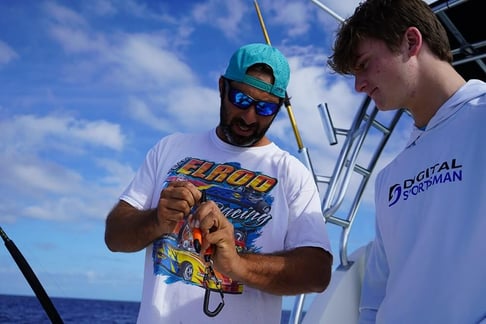
- Your website
- Google listings
- Booking platforms
- Social media pages
- Boat graphics and wraps
- Hats, shirts, and merchandise
If another guide starts using the same name, customers may become confused about which business they are booking with.
Registering a trademark gives you the exclusive legal right to use your business name for your services and allows you to stop others from using it.
A trademark can also strengthen your business if you ever:
- Expand your guide service
- Sell branded merchandise
- License your brand
- Sell the business in the future
What Is a Trademark?
A trademark is legal protection for a brand name, logo, or symbol used to identify a business.
For fishing guides and charter captains, this usually means protecting:
- The name of your guide service
- The name of your charter business
- Your company logo
Trademark registration is handled by the United States Patent and Trademark Office, which manages federal trademark protection in the United States.
Once registered, your trademark gives you nationwide protection for your brand within your industry.
Trademark Classes Used by Fishing Guides and Charter Captains
When filing a trademark, you must select the category that describes your services. These are called trademark classes.
Fishing guides and charter businesses typically use two classes.
Class 41 – Fishing Guide Services
Class 41 covers the guided fishing experience and recreational services.
Examples include:
- Fishing guide services
- Guided fishing trips
- Fishing instruction
 Class 39 – Charter Boat Services
Class 39 covers transportation services, including operating a boat that carries passengers.
Examples include:
- Charter boat services
- Boat charter services for fishing trips
Many fishing charter companies file in both classes because they guide fishing trips and operate a charter vessel.
How to Trademark a Fishing Guide or Charter Business Name
The trademark process typically follows four steps.
Step 1: Search for Existing Trademarks
Before filing a trademark application, you should check whether your business name is already registered or being used by another guide.
You should search:
- The USPTO trademark database
- Google and online directories
- Social media platforms
If a similar name is already in use in your industry, your application may be rejected.
Step 2: File a Trademark Application
Trademark applications are filed online with the USPTO.
The application includes:
- Your business name
- The owner of the trademark
- The trademark class
- A description of your services
- Evidence that the name is being used in commerce
Once submitted, the application enters the review process.
Step 3: USPTO Review
An examining attorney reviews the application to determine whether it meets trademark requirements.
This review typically occurs 4 to 6 months after filing.
If the examiner finds issues, they may send an Office Action requesting clarification or corrections.
Step 4: Trademark Registration
If the application is approved and no one objects to the trademark, the USPTO will register the trademark.
The full process typically takes 8 to 12 months.
How Much Does It Cost to Trademark a Fishing Guide Business Name?
Trademark costs include government filing fees and optional attorney fees.
USPTO Filing Fees
The USPTO charges fees per trademark class.
Typical cost:
- $250 per class
Examples:
|
Filing Type |
Estimated Government Cost |
|
Trademark for fishing guide services (Class 41) |
$250 |
|
Trademark for guide services + charter services (Class 41 + 39) |
$500 |
Attorney Fees
Many business owners hire a trademark attorney to help with the process.
Typical costs:
|
Service |
Estimated Cost |
|
Basic trademark filing |
$500 – $1,000 |
|
Trademark search and filing |
$900 – $2,000 |
|
Office action response |
$300 – $800 |
Most fishing guides spend $1,200 to $2,000 total if they use an attorney.
You can also file the application yourself through the USPTO website.
When Should a Fishing Guide Trademark Their Business Name?
You should consider trademark protection once your guide business is established and you plan to invest in your brand.
Good times to file include:
- After launching your guide business
- When your bookings begin growing
- Before investing heavily in marketing
- Before selling branded merchandise
Registering early helps prevent conflicts with other businesses using similar names.
Your brand name is often the first thing customers see when searching for a fishing guide or charter. Registering a trademark helps protect the reputation you have built and ensures that your business name remains uniquely yours.
For many fishing guides and charter captains, the cost of trademark protection is small compared to the long-term value of protecting your brand.