%20(1).png?width=349&height=75&name=DSman%20logo%20blue%20dark%201200%20(1)%20(1).png)
Many fishing guides and charter captains try to file trademarks themselves. This is completely possible and many small businesses successfully do it.
However, a few mistakes come up repeatedly. These mistakes can delay approval, weaken trademark protection, or even cause the application to be rejected.
Understanding these issues before filing can help you protect your business name and avoid costly problems later.
Below are the most common trademark mistakes fishing guides make when filing with the United States Patent and Trademark Office.
What Is a Trademark for a Fishing Guide Business?
A trademark protects the name, logo, or brand used to identify your business.
For fishing guides and charter captains, a trademark typically protects:
- The name of the guide service
- The charter company name
- The brand used for marketing and booking trips
Registering a trademark with the United States Patent and Trademark Office gives you the legal right to use that name in connection with your services.
Without a trademark, another business could legally use a similar name and confuse customers.
1. Choosing a Name That Is Too Descriptive
This is the most common reason trademark applications are rejected.
Names that simply describe the service are difficult to protect.
Examples that may be rejected:
- Gulf Coast Fishing Charters
- Key West Fishing Guide
- Deep Sea Fishing Trips
These terms describe the service rather than identify a unique brand.
The USPTO often considers these descriptive trademarks, which cannot easily be protected.
Stronger trademarks are more distinctive and brand-focused.
Examples:
- Silver Tide Charters
- Bluewater Pursuit
- Redline Sportfishing
The more unique the name, the easier it is to register and protect.
2. Not Conducting a Complete Trademark Search
Many fishing guides only search the USPTO trademark database before filing. 
However, potential conflicts can also exist in:
- State trademark records
- Business registrations
- Domain names
- Social media accounts
- Unregistered brands already operating in commerce
These are called common law trademarks.
If another guide has been using a similar name first, they may still have legal rights to that brand even if it is not federally registered.
3. Filing Only the Logo Instead of the Business Name
Some guides attempt to trademark only their logo.
While logos can be protected, the protection is limited to that specific design.
If the logo changes in the future, the protection may not apply.
Trademark attorneys usually recommend filing a word mark, which protects the business name itself regardless of font or design.
Example:
If you trademark “Bluewater Pursuit”, the protection applies even if the logo changes.
4. Choosing the Wrong Trademark Class
Trademark applications must include a class that describes the services offered.
Fishing guides typically use one or both of these classes.
Class 41
Fishing guide services and guided fishing trips.
Class 39
Charter boat services that transport passengers.
If the wrong class is selected, the trademark may not properly protect the business.
Some guides mistakenly choose tourism or retail categories that do not cover guiding services.
5. Submitting the Wrong Specimen
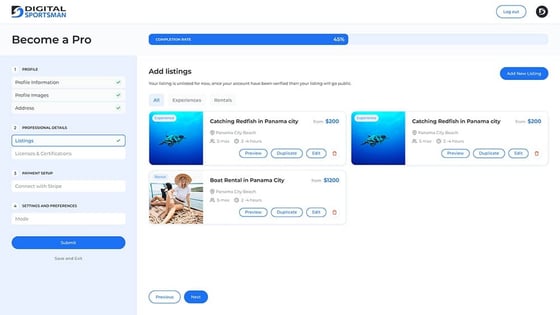 A specimen is proof that the trademark is being used in business.
The USPTO requires evidence that the business name is connected to the services offered.
Examples of acceptable specimens include:
- A website offering guided fishing trips
- A booking page displaying the business name
- Advertising materials promoting charter services
Examples that are often rejected include:
- A logo by itself
- Merchandise such as hats or shirts
- A business card without a description of services
The specimen must show the name used in connection with the service, not simply displayed as a logo.
6. Filing Under the Wrong Owner
Another common mistake is listing the incorrect owner of the trademark.
Examples include filing under:
- An individual instead of the LLC
- A business partner instead of the company
- A DBA instead of the legal entity
If the wrong owner is listed, the application may need to be corrected or refiled.
7. Waiting Too Long to File
Many fishing guides wait until their brand becomes popular before filing a trademark.
Unfortunately, this increases the risk that another business may register a similar name first.
Filing earlier helps secure your brand before competitors enter the market.
 Final Thoughts
Most trademark problems occur before the application is filed.
Choosing a distinctive business name, conducting a thorough trademark search, and filing under the correct class are the most important steps.
For fishing guides and charter captains who rely on their reputation and repeat customers, protecting the business name early can prevent conflicts and protect the brand you have worked hard to build.